

“There is nothing that enters a man from outside which can defile him; but the things which come out of him, those are the things that defile a man.”
– Mark 7:15
While reading Mark chapter 7 one day, I noticed a huge discrepancy in what Jesus taught about what defiles a man and what the LDS church has taught. This chapter seemed so contrary to what the LDS church has preached about forbidden substances like alcohol, tobacco and even tea & coffee making one unclean, and not just unclean but unworthy to enter the temple. Some LDS members have varying opinions on the definition of “defile” and the implication of the church’s rigid Word of Wisdom requirement in the temple recommend interview. So here I will lay it all out beginning with the church’s current teachings on the Word of Wisdom. Then we’ll explore the historical variations and arguments of the Word of Wisdom, the Biblical stance on defilement including Jesus’ own words in Mark 7, and lastly my perspective on alcohol and alcoholism through a Biblical lens.
Let’s start by reviewing the definition of “defile” from all perspectives.
Webster’s Dictionary: To make unclean or impure: such as to corrupt the purity or perfection of (debase); to violate the chastity or virginity of; to make physically unclean especially with something unpleasant or contaminating; to violate the sanctity of (desecrate).
LDS Triple Combination Index: See corrupt; filthiness; pollute; unclean.
Bible Hub Topical Encyclopedia: The concept of “defile” in the Bible is closely associated with the idea of impurity, corruption, and desecration, both in a physical and spiritual sense. The term is used to describe actions, objects, or states that render a person or thing unclean or unholy, often in violation of God’s commandments and standards of holiness.
Current Church Teaching
To avoid any accusations of twisting or misquoting what has been taught in the church regarding the Word of Wisdom (WoW) and what “defile” means, I will simply share a list of quotes with links directly from LDS teaching manuals and conference talks currently available on the church website.
- “God has revealed the Word of Wisdom as a commandment for the physical and spiritual benefit of His children… The Lord revealed in the Word of Wisdom that the following substances are harmful: alcoholic drinks, tobacco, tea and coffee.” (Gospel Topics, Word of Wisdom)
- “Bishops and stake presidents are responsible for determining whether members are worthy to receive Church ordinances such as baptism or those available in the temple or to enter the temple to receive ordinances for others. Keeping the Word of Wisdom is a part of that worthiness.” (Doctrine and Covenants Student Manual, Section 89, The Word of Wisdom)
- “Though she knew it was contrary to the Word of Wisdom, she developed the habit of drinking coffee and kept a coffee pot on the back of her stove. She claimed that “the Lord will not keep me out of heaven for a little cup of coffee.” But, because of that little cup of coffee, she could not qualify for a temple recommend, and neither could those of her children who drank coffee with her.” (April 2007 General Conference, Remembering, Repenting, and Changing)
- “We must obey the Word of Wisdom to be worthy to enter the temple. If we do not obey the Word of Wisdom, the Lord’s Spirit withdraws from us. If we defile the “temple of God,” which is our body, we hurt ourselves physically and spiritually.” (Gospel Principles Manual, Chapter 29: The Lord’s Law of Health)
- “Explain that before we may enter the temple, the Lord expects us to be free of practices that make our lives unclean and unhealthy, both spiritually and physically. Read parts or all of the following scriptures: 1 Corinthians 3:16–17 (Our bodies are temples of God and should not be defiled.)” (Endowed from on High: Temple Preparation Seminar Teacher’s Manual, Lesson 2: We Must Be Worthy to Enter the Temple)
Historical Variations Within Church Teaching
The Word of Wisdom was first introduced by Joseph Smith in 1833 by a revelation that later became D&C 89. Right off the bat, Joseph establishes that it was not meant to be a commandment or constraint. For those of you who like to inspect the original source documents, here is the record from the Joseph Smith Papers.
“To be sent greeting, not by commandment or constraint, but by revelation and the word of wisdom.” (D&C 89:2)
We know that Joseph did not enforce obedience to the word of wisdom with any strictness. He himself continued to drink coffee and alcohol until his demise in Carthage Jail, although we can suppose his coffee didn’t burn his tongue. This interesting list provides sources for all of Joseph’s activities and directives regarding alcohol.
The second president of the church Brigham Young owned a distillery in Utah and was addicted to tobacco for most of his life. Fair Latter Day Saints offers some apologetics about Brigham Young and the WoW, putting his use of tobacco and alcohol in a less trivial light by rationalizing that these were often used for medicinal purposes. While this is true, enough evidence exists to suggest that Brigham was not just soothing toothaches and supplementing herbal tinctures. Recent research has uncovered unsettling letters revealing that Brigham intentionally diverted wagon teams from aiding the Willie & Martin handcart companies to retrieve wagons full of supplies including liquor, tobacco, tea and coffee (39-46 minute mark of this video).
For the first few decades of the church, what it meant to follow the Word of Wisdom was heavily debated. While some church leaders drank coffee, tea and alcohol, others prohibited even hot cocoa and hot soup.
“We are told, and very plainly too, that hot drinks—tea, coffee, chocolate, cocoa and all drinks of this kind are not good for man… We must not permit them to drink liquor or hot drinks, or hot soups or to use tobacco or other articles that are injurious.” (George Q Cannon, 1868)
By the 1900’s the emphasis of the Word of Wisdom became more focused on abstaining from meat. While many Mormons drank the occasional coffee or beer, President Woodruff stated that he believed “eating pork was a more serious breach than drinking tea or coffee” (The Word of Wisdom: From Principle To Requirement, page 1 & 2).
If the earliest leaders of the church did not strictly obey the Word of Wisdom, and Joseph Smith explicitly said it was not meant to be a commandment or constraint, how did it become a measure of our worthiness in the temple recommend interview? To understand more of the development of this commandment I went to the Revelations in Context articles on the church website. In it they described the first 90ish years of the church as an “incubation period” allowing people to develop their own traditions of abstinence from addictive substances, then when modern medicine became widely available they were ready to enforce the higher standard of strictly abstaining from them.
“By the early 20th century, when scientific medicines were more widely available and temple attendance had become a more regular feature of Latter-day Saint worship, the Church was ready to accept a more exacting standard of observance that would eliminate problems like alcoholism from among the obedient. In 1921, the Lord inspired President Heber J. Grant to call on all Saints to live the Word of Wisdom to the letter by completely abstaining from all alcohol, coffee, tea, and tobacco. Today Church members are expected to live this higher standard.” (Revelations in Context)
This article irked me in two ways: first, the glorification of pharmaceutical medicines over God-made plants. And second, the failure to mention the context of the 1920’s. There is no indication of which 20th century scientific medicines supposedly helped replace the need for natural stimulants such as coffee, tea, tobacco or alcohol, but a bit of research shows that the marketed medicines commonly used at the time were morphine (opioids) and cocaine — both extremely addictive and dangerous substances, hardly Godsends worthy of banning natural substances.
However I found it most interesting that the “revelations in context” article failed to mention the context of 1920 — the Prohibition Era. The early 1900’s was full of heated political debate on the issue of alcoholism, for over a decade church leaders were at odds with each other, some supporting the idea of Prohibition and others against it. President Snow opposed banning alcohol and was upset when he was asked to stop selling it at the Saltair resort, he refused to comply. After Snow’s death, Joseph F Smith closed the Saloon at Saltair in 1902 and began counseling stake presidents to refuse temple recommends to those who would not adhere to the WoW. Joseph F Smith’s successor Heber J Grant was also very vocal with his prohibitionist attitudes.
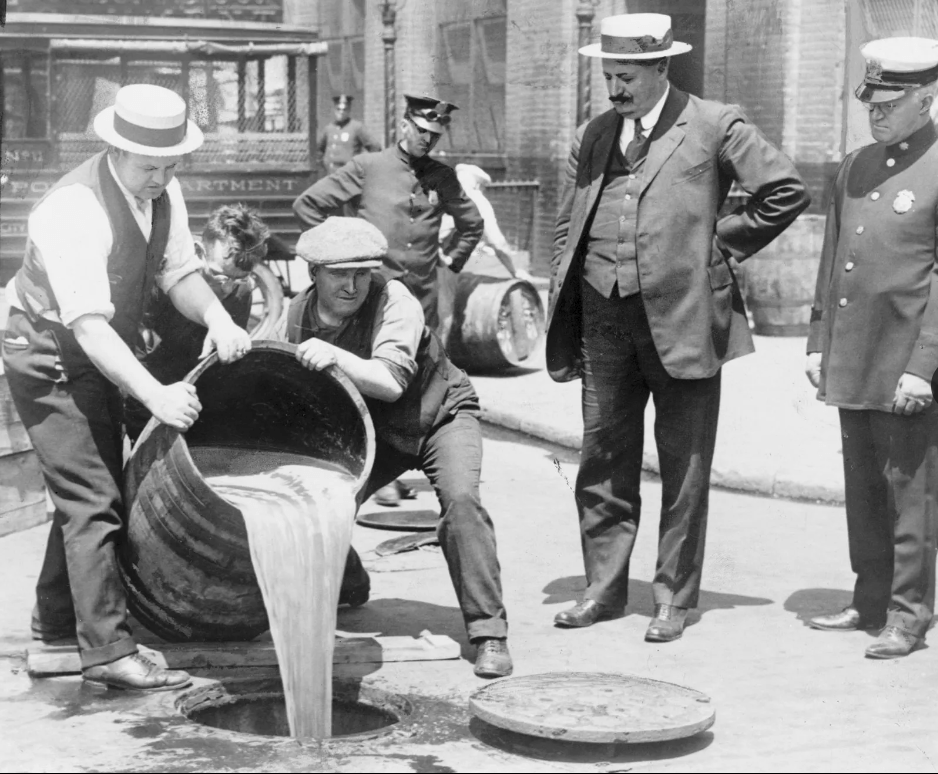
In 1917 the US Senate proposed the 18th Amendment and by 1919 Prohibition was ratified as part of the Constitution, with the law going into full effect as of 1920. At the same time, Heber J Grant had assumed the role of president of the church in October 1918. Just one year after the Prohibition law went into full effect, Grant announced that strict obedience to the WoW would now be a requirement to receive one’s temple recommend. I quickly realized that what the church narrative claims was Grant’s inspiration from God was really a political movement and legislature after which the church followed suit. However when Prohibition was overturned 13 years later, the church, still led by Grant, did not lift the ban.
There is a stark inconsistency between the WoW found in D&C 89 and Grant’s Prohibition requirement. The Revelations in Context article claims by 1920 “the Church was ready to accept a more exacting standard of observance” of the WoW, and while the new temple worthy standard required total abstinence from alcohol, the original WoW did not.
“Nevertheless, wheat for man, and corn for the ox, and oats for the horse, and rye for the fowls and for swine, and for all beasts of the field, and barley for all useful animals, and for mild drinks, as also other grain.” (D&C 89:17)
When Joseph Smith gave the WoW revelation, he specified in verse 17 that barley and “also other grain” were good for making mild drinks — that’s beer. He distinguished a difference between strong drinks and mild drinks. Strong drinks, mentioned in verses 5 and 7, were strongly discouraged and he gave instruction to use them only for washing.
5 That inasmuch as any man drinketh wine or strong drink among you, behold it is not good, neither meet in the sight of your Father, only in assembling yourselves together to offer up your sacraments before him.
6 And, behold, this should be wine, yea, pure wine of the grape of the vine, of your own make.
7 And, again, strong drinks are not for the belly, but for the washing of your bodies.
Many of you may be as ignorant as I was and don’t know the difference between strong drinks and mild drinks. Strong drinks such as whiskey, gin and rum have an alcohol content ranging from 40-80%, meaning a consumer can reach intoxication much faster than if they were drinking a mild drink such as beer which has an alcohol content of 4-10%. Joseph also put wine in a separate category from strong drinks, although generally discouraged he approved of house made wine for the sacrament. Wine has a wider range of alcohol content, ranging from 5-23%, with the average today at 12%. The recommended house made wine would typically have a lower alcohol content which is why Joseph approved of it, as it had a similarly low alcohol content as “mild drinks made of barley,” or beer, which Joseph never prohibited.
“The Lord commands us not to use wine and strong drinks, meaning drinks containing alcohol.” (Gospel Principles Manual, Chapter 29: The Lord’s Law of Health)
Today church manuals make the claim that Joseph’s WoW revelation discouraged all alcohol when that is simply not the case. After Heber J Grant’s Prohibitionist policy, all alcohol regardless of alcohol content was forbidden, beer was pushed into the same category as strong drinks, and D&C 89:17 was swept under the rug. What the church now enforces as the WoW temple-worthy standard is not only a contradiction to itself (being a commandment when verse 2 explicitly says it is not), it’s evolution of understanding and application prove it to be nothing more than a false tradition, or in Book of Mormon terms “a tradition of our fathers.”
Biblical Perspective
Now let’s get back to Mark chapter 7 where Jesus said that nothing that goes into a man can defile him. Jesus said this in response to the Pharisees asking why he and his followers didn’t keep the tradition of the elders which was to wash their hands and cups before eating. The Pharisees believed that eating with unwashed hands defiled a person.
1 Then came together unto him the Pharisees, and certain of the scribes, which came from Jerusalem.
2 And when they saw some of his disciples eat bread with defiled, that is to say, with unwashen hands, they found fault….
Jesus tells them that their hearts and their focus were in the wrong place. He called them hypocrites for holding these traditions as doctrine while ignoring the true commandments of God.
5 Then the Pharisees and scribes asked him, why walk not thy disciples according to the tradition of the elders, but eat bread with unwashen hands
6 He answered and said unto them, well hath Esaias prophesied of you hypocrites, as it is written, this people honoureth me with their lips, but their heart is far from me.
7 Howbeit in vain do they worship me, teaching for doctrines the commandments of men.
8 For laying aside the commandment of God, ye hold the tradition of men, as the washing of pots and cups: and many other such like things ye do.
9 And he said unto them, full well ye reject the commandment of God, that ye may keep your own tradition.
The tradition of the Pharisees was to deem people unclean according to what they put into their bodies or what they came into contact with. Jesus challenged that and taught that nothing that goes into the body can defile it because it does not enter his heart, it simply goes in and comes out. He taught that people are defiled by what comes out of them, an evil heart produces evil actions — sin, which defiles a person.
15 There is nothing from without a man, that entering into him can defile him: but the things which come out of him, those are they that defile the man.
18 And he saith unto them, are ye so without understanding also? Do ye not perceive, that whatsoever thing from without entereth into the man, it cannot defile him;
19 Because it entereth not into his heart, but into the belly, and goeth out into the draught, purging all meats?
20 And he said, that which cometh out of the man, that defileth the man.
21 For from within, out of the heart of men, proceed evil thoughts, adulteries, fornications, murders,
22 Thefts, covetousness, wickedness, deceit, lasciviousness, an evil eye, blasphemy, pride, foolishness:
23 All these evil things come from within, and defile the man.
If we apply this principal to the WoW we would say that no coffee, tea, tobacco or alcohol going into the body defiles a man, but evil in the heart of the man produces evil actions which defile him. This is easy to understand with coffee, tea an even tobacco, but alcohol consumption has such a negative connotation its hard to comprehend.
Alcoholism
Many Mormons have contended with me, “so you’re saying being an alcoholic is ok!?” Absolutely not, that’s not what I’m saying. I’m saying that the substance doesn’t create the evil heart, rather the evil heart leads a person to destructive behaviors like alcoholism. And please note that in this context, I understand “evil heart” to mean damaged, corrupted, and out of alignment with Jesus’ gospel of love and redemption. Jesus did not forbid consuming alcohol, we all know he drank wine on several occasions, but the Bible does specifically counsel against drunkenness.
“Let us behave decently, as in the daytime, not in carousing and drunkenness, not in sexual immorality and debauchery, not in dissension and jealousy. ” (Romans 13:13)
“Who has woe? Who has sorrow? Who has strife? Who has complaints? Who has needless bruises? Who has bloodshot eyes? Those who linger over wine.” (Proverbs 23:29-30)
Let’s talk about what leads one to alcoholism (or substance abuse of any kind). Alcohol is a numbing agent used to temporarily relieve internal conflict. Someone without inner turmoil is not looking for a numbing agent and is unlikely to become an addict. Traumatic events such as abuse, loss, and betrayal produce depression, anger, and anxiety that if not dealt with in a healthy way that leads to healing, can fester in the heart and mind to a state of depression. Certainly overuse of alcohol can lead to depression as alcohol depletes dopamine levels, but alcohol dependence is often preceded by depression or anxiety. “People who experience major depressive symptoms may start to rely on alcohol to ease their symptoms and feel better, but over time, this can develop into a full-blown alcohol use disorder” (American Addiction Centers).
We live in a culture where we only see people’s outward behavior and not the inner turmoil. Substance abusers are often shamed for the addiction and are not seen for the underlying pain, the root cause of the destructive cycle.
The Bible discourages strong drinks not because alcohol is inherently bad, but because it’s detrimental to the hurting soul to rely on alcohol to numb the pain instead of relying on Jesus to heal it. With this perspective in mind, these verses discouraging drunkenness are understood less as a rule to follow, but more as an invitation for spiritual healing.
- “Do not be drunk with wine, in which is dissipation; but be filled with the Spirit.” (Ephesians 5:18)
- “Therefore gird up the loins of your mind, be sober, and rest your hope fully upon the grace that is to be brought to you at the revelation of Jesus Christ; as obedient children, not conforming yourselves to the former lusts, as in your ignorance; but as He who called you is holy, you also be holy in all your conduct, because it is written, Be holy, for I am holy.” (1 Peter 1:13-16)
- “Walk in the Spirit, and you shall not fulfill the lust of the flesh. For the flesh lusts against the Spirit, and the Spirit against the flesh; and these are contrary to one another, so that you do not do the things that you wish. But if you are led by the Spirit, you are not under the law. Now the works of the flesh are evident, which are: adultery, fornication, uncleanness, lewdness, idolatry, sorcery, hatred, contentions, jealousies, outbursts of wrath, selfish ambitions, dissensions, heresies, envy, murders, drunkenness, revelries, and the like; of which I tell you beforehand, just as I also told you in time past, that those who practice such things will not inherit the kingdom of God.” (Galatians 5:16-21)
- “Therefore let us not sleep, as others do, but let us watch and be sober. For those who sleep, sleep at night, and those who get drunk are drunk at night. But let us who are of the day be sober, putting on the breastplate of faith and love, and as a helmet the hope of salvation. For God did not appoint us to wrath, but to obtain salvation through our Lord Jesus Christ.” (1 Thessalonians)
- “And do not be conformed to this world, but be transformed by the renewing of your mind, that you may prove what is that good and acceptable and perfect will of God.” (Romans 12:2)
These verses are not condemning the drinker, they’re discouraging the use of physical substances to numb your pain and offering healing through Jesus Christ. Please notice the powerful invitations to spiritual healing in these verses: be filled with the spirit, rest your hope fully on the grace of Jesus, walk in the spirit, to obtain salvation through Jesus, and be transformed by the renewing of your mind!
The Pharisees were fixated on the legalism of the physical world. The LDS church has become modern day Pharisees in their legalistic application of the WoW. They have done exactly what Jesus said the Pharisees were doing by teaching their own traditions as commandments. Not only that, but the loss of “worthiness” for those who struggle with substance abuse perpetuates the shame cycle that keeps them in self-loathing and depression repeating the same numbing and self-medicating behaviors.
“Howbeit in vain do they worship me, teaching for doctrines the commandments of men. For laying aside the commandment of God, ye hold the tradition of men, as the washing of pots and cups: and many other such like things ye do. And he said unto them, full well ye reject the commandment of God, that ye may keep your own tradition.” (Mark 7:7-9)
So what now? Should everyone reading this in the middle of their faith crisis pick up their first beer because even Joseph Smith said that was ok? I’d counsel anyone on this very difficult faith journey to be careful adding mind altering substances to their routines. Be aware of the emotional roller coaster you’re already on, probably feeling betrayed, lied to, angry, alone. First seek to work through these very valid emotions with our healer Jesus Christ. I promise the devastation and anguish of a faith crisis are just growing pains and there are beautiful faith-filled days ahead. And if you do struggle with alcohol addiction, please know that your worthiness is not dependent on your works. You are no less worthy today than you were before you ever drank alcohol. Your pain is valid and Jesus wants to take it away from you. You can be saved from your pain and your alcohol use through Jesus our healer.
For by grace ye are saved, through faith: and this not of yourselves; it is the gift of God: not by works, that no one may boast. (Ephesians 2:8)
Consider praying this prayer for those struggling with alcohol addiction:
“God, I’m tired of how my addiction to alcohol is harming my health and hurting the people I love. I want to be sober. But I can’t stop drinking on my own. Please help me, God. Break the control that alcohol has over me, and give me the power I need to heal. Lead me to the best treatment plan. I’m willing to do whatever I should do to achieve sobriety – work with a doctor, go to therapy sessions with a counselor, join a support group, go to rehab, or anything else. Renew my mind so I won’t be triggered to drink alcohol, but instead will learn healthy ways to manage stress and have fun. Heal my body from the damage that alcohol has caused, and retrain my cells not to crave alcohol but to crave only healthy nourishment. Surround me with loving and wise people who will support me in my recovery. Stay close to me, my heavenly Father. Please give me your peace. I commit to relying on you to guide and help me each day of my journey to sobriety, and beyond. Thank you for all your help, God. Amen.” (Crosswalk)

 Ex-Mormon Bible Study
Leave a reply to Josh Cancel reply